Eckhart Köppen, author of the Blunt, the Newton bluetooth stack, has posted code on GitHub for manually controlling the SerPortSel3 signal. His code manually controls the proper DIO pins using functions in the Newton ROM.
The SerPortSel Pins
The internal serial port of the Newton MessagePad 2×00 exposes the same ports as the external interconnect. In order to prevent two devices (one internal, one external) from diving the port at the same time, there are “Serial Port Select Pins” for Serial …
The Internal Interconnect Port
I seem to have an odd, recurring interest in the internal serial port on the MP2x00. A few years back I tried to make an internal bluetooth module. It worked, but I never got the RF design correct so it didn’t work well.
Now, I’d like to try for an …
Alternate UART for Sailfish
UART0, otherwise known as the Mightyboard’s primary serial port, is connected to the USB hardware and used for communicating with Replicator G. Both RevE and RevG Mightyboards have an unpopulated header that contains for the 2nd serial port, UART1. …
Experimental Replacement for FlashAir Web User Interface
This is an experimental replacement for the FlashAir user interface. I use on my v2 card. I’m not if it’ll work with a v1 card, but it should.
This replacement UI for the FlashAir gives you a few more features on the web interface:
- Delete files from file …
Dropzone for FlashAir Uploads
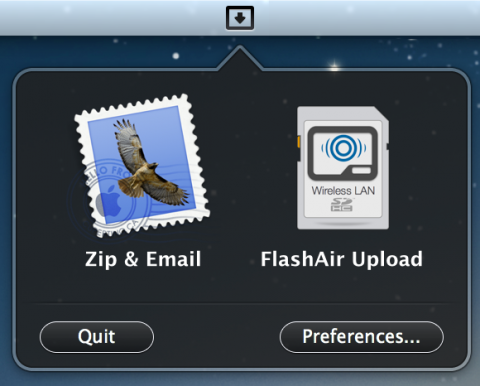
I recently acquired Dropzone in as part of a discount software bundle. It essentially an enhanced “droplet” app that allows you to take action on files that you drag and drop to an icon.
I liked that it has a scriptable API in Ruby, and thought it might …
$32 Network Print Server for Makerbot
Information on taking a LPC1768 and turning into a print server for the Makerbot. Use a Toshiba FlashAir to load your X3G file to the SD card, then use this to send the build command and start the print. The Mini-DK2 development board is $32 on eBay, or …
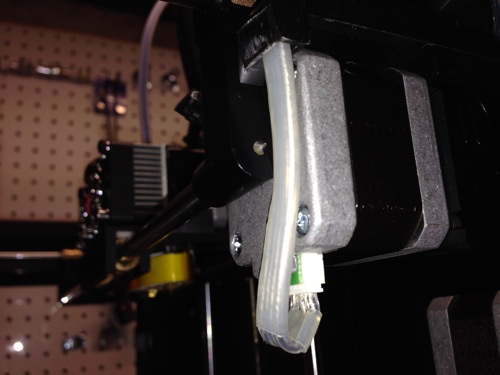
Hi-flex Cable Upgrade for Rep 2/2X X-Axis Harness
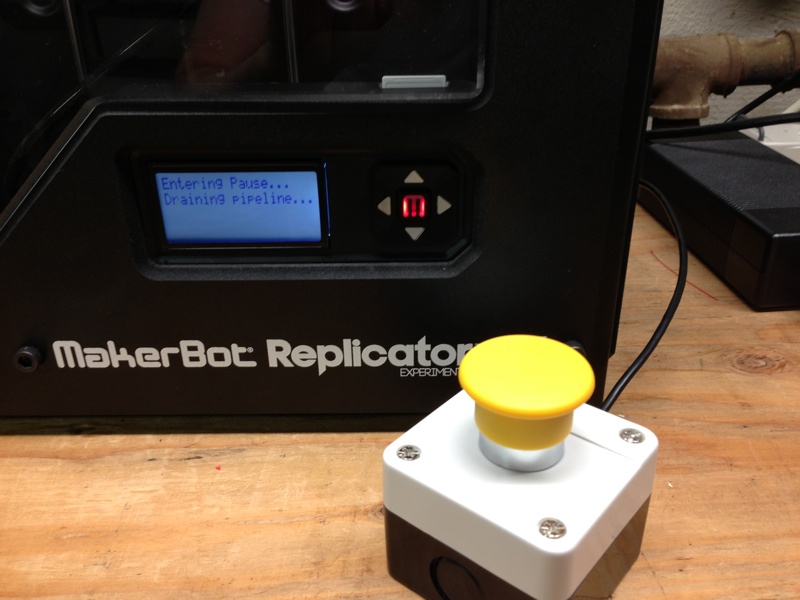
Sailfish P-Stop for Replicator 2/2X
Toshiba FlashAir WiFi-Enabled SD Card
On the Makerbot Operator’s Group there was a discussion on network control of the Makerbot. A few options were discussed, including the EyeFi and the Toshiba FlashAir.
I decided to buy a FlashAir and see if I could get it to work. The ability to both …